The Startup Exchange
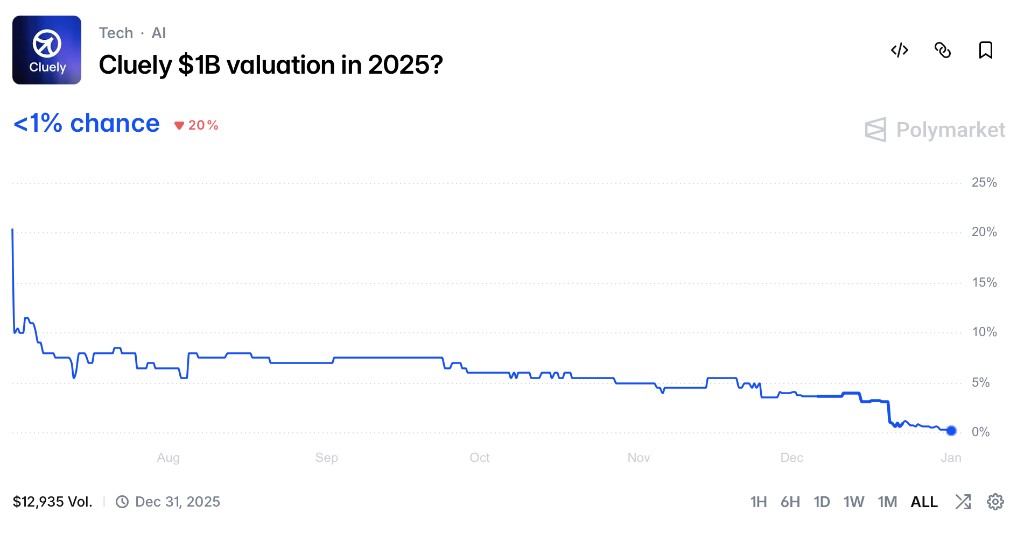
Polymarket and Kalshi showed that public markets no longer wait for official securities, earnings reports, or exchange listings. If people care about an outcome, they will try to price it.
Elections became markets.
Court cases became markets.
AI launches became markets.
Regulatory decisions became markets.
Company events became markets.
The internet is learning to express belief as price.
Startups are not exempt from this.
Over the next few years, every ambitious company will become legible to markets earlier than its founders expect. Not because it chose to IPO. Not because it issued equity. But because users, scouts, investors, communities, and competitors will already be forming a public view around its future.




That market can emerge badly: fragmented, extractive, unofficial, and detached from the company itself.
Or it can be structured.
That is what Street exists to build.
Street is an accelerator purpose-built for the next stage of company formation: a world where startups become public narratives long before they become public companies.
We help founders turn early belief into structured, liquid, rules-based participation — without pretending tokens are equity, without handing governance of the company to strangers, and without reducing startups to speculation.
The old model asked founders to stay private until the very end.
The internet is making that impossible.
Street gives founders the opt-in path.
Street is the structured path for early markets
1. Accept that the market forms anyway
If people care about a company, they will form a view around it before the company is ready.
That view can live in chat rooms, prediction markets, private secondaries, KOL posts, and rumor-driven price discovery.
Street starts from the premise that early markets are inevitable. The question is whether founders shape them or inherit them.
2. Standardize the listing primitive
Markets only become legible when participants understand what they are pricing.
ERC-S gives startup participation tokens a common structure, so every company using the standard speaks the same market language.
Different companies can have different stories, but the participation primitive stays consistent.
3. Separate company ownership from participation
A Street token does not pretend to be company equity.
It is a rules-based participation layer around a company narrative, ecosystem, and market.
That distinction matters because founders should not have to hand company governance to strangers in order to make early belief legible.
token
4. Make participation useful, not purely speculative
Speculation alone is not enough.
The participation layer needs utility, governance, access, reputation, distribution, and a reason to exist beyond the chart.
Street builds tokens so market energy can support the company instead of becoming a detached side bet.
ALPHA
42¢
NOVA
88¢
KLED
19¢
5. Let markets move between companies
If every startup participation token is built on a different shape, the market fragments.
If every ERC-S token follows the same core standard, market participants can compare, rotate, and price across companies without relearning the primitive each time.
That is the exchange layer Street is building: not stocks, not synthetic equity, but a standardized market for startup participation.
What the opt-in path requires
A startup market cannot just be a ticker. It needs rules, context, education, and a clear boundary between company ownership and ecosystem participation.
The next stage is making that structure easier for founders, holders, exchanges, and the broader market to understand.
The goal is not to make every company launch a token. The goal is to give ambitious founders a better option when the market starts forming around them anyway.
Street gives that market a front door, a ruleset, and a reason to stay connected to the company.
A vision of a public startup exchange
The ultimate vision for Street is not to make startups look like public equities.
It is to build a new market category for startup participation.
Public stock markets work because every company lists into a familiar standard. Different businesses, same basic instrument. Same pricing language. Same market surface.
Street applies that idea to startup ecosystems without turning the token into stock. Every ERC-S token is different because every company is different. But every ERC-S token gets its value through the same standardized participation framework.
That means market participants can engage across startups through a shared primitive. They can understand what they are pricing, compare one ERC-S token to another, and move between company ecosystems without every market needing to invent its own rules from scratch.
A new system will:
1. Let founders decide when and how early belief becomes public.
2. Make startup narratives legible without forcing an IPO.
3. Standardize participation through ERC-S instead of equity.
4. Let market participants price different startups through the same framework.
5. Keep company governance separate from ecosystem participation.
6. Let holders understand what they do and do not own.
7. Keep liquidity attached to context, standards, and company progress.
Within this system, price becomes more than a detached signal. It becomes part of a standardized exchange layer for startup participation: not shares, not synthetic equity, not a prediction market wrapper, but a new primitive with its own rules.
The current system is good at pretending startups are invisible until the final stage. It is good at asking founders to ignore the market until the market has already formed without them.
But it is not good at handling public belief when it arrives early.
It is not good at separating useful participation from speculation.
It is not good at giving founders an opt-in path.
To push company formation forward, we need more than private markets on one side and chaotic public speculation on the other.
We need rules.
We need boundaries.
We need a shared token standard.
We need a public startup exchange that is not trying to be the stock market.
This does not just happen.
It requires founders, operators, scouts, funds, exchanges, and communities to build markets that can all speak the same ERC-S language.
The internet already learned to price belief.
Now startup participation needs a standard.
This is Street, a public startup exchange built on ERC-S.
Build with StreetYours truly,
Lukas Gruber
Founder, Street
gruber@street.app
If the internet is going to form a market around your company before you asked for one, choose the structure before the market chooses it for you.
More on Street
- View tokens as they go live
- Read ERC-S and the Street framework
- Apply here to build with Street